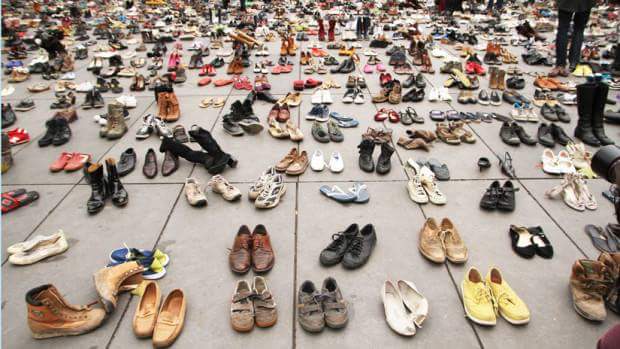
Two kinds of love

June 17, 2013 by

There are, I think, two kinds of love: a because love and a despite love.

A because love cares because of what we do, what we say, the way we look.  It is a love that says we matter because we stack up, we measure up. The simplest way to identify this love is to notice what happens when we dont measure up.  Notice the effort we put into not being discovered, how hard we try to manage impressions, and how many excuses we come up with to justify our mistakes.   A because love is a love of high anxiety and vigilance.  It fuels a fruitless crusade to finally become “enough” that consumes so much of our lives.

A despite love says there is nothing to prove.  It doesnt try to banish warts from the world.  It is love that says you are a prize even when you dont act like one.  It is the love we wish all of our love was.  It is the love hardest to get and hardest to give.  It is God’s greatest gift and the lack of it the source of our greatest disappointment in each other and ourselves.

The diagnostic fallacy

June 16, 2013 by

The Diagnostic Fallacy…..” :

In regard to the DSM the biggest fallacy that I see is not the proposal for a better diagnostic system but the fallacy that any diagnostic system is going to make things better. There is a difference in believing that a diagnosis might tell you something useful about someone and believing that it can tell you something fundamentally true about him. In the first instance the diagnosis is a map about a portion of someone’s experience which like all maps serves to guide you and inform you about how to make decisions about what to do. In the second the diagnosis is not a map to the truth, but the truth itself. It leads you to the ultimately destructive conclusion that a person is what you have decided to call him. The results in every form of human endeavor throughout history have proved time after time the tragedy of this. The history of the mental health system in this country has been too much a history of ultimately cruel and mean things being done to “mentally ill” people that we convince ourselves are being done for their own good. The lived experience of countless people is that labels, rather they be “scientific” or not, carry with them a great deal of prejudice and discrimination. Any professional who believes the act of labeling, regardless of the scientific language they cloak it in, is a morally neutral act is out of touch with the world of the people he labels.

Surviving Ourselves

June 15, 2013 by

From a friend:

Recovery is based on the faith we can survive ourselves. Forgiveness is based on the faith we can survive other people. We tend not to have one without the other.

“I start the day the war begins…”

June 15, 2013 by

Rage

June 15, 2013 by

Rage and sorrow make poor companions.  Each makes the other worse.

For perhaps the very first time in my life rage is an overwhelming, incredibly overwhelming part of my life.  My family was hurt and hurt badly by a man we believed a friend.  We have since found out that he had a million skeletons in his closet and was nothing like what he presented himself to us.  The damage he did was real and paralyzing.

I found out a couple of days ago that the judicial system has decided not to prosecute him due basically to legal technicalities.  He is going to walk free.  Without going into a lot I simply cant talk about issues of mental health stigma are intricately tied up in this situation.

I am tied up in knots and dont know how to get out.  I am so angry, so angry. 

Please pray that God help me find a spirit of forgiveness.  Without it I fear I may stuck in this prison forever.

The assumption of good will: a basis for helping and being helped

June 13, 2013 by

Your trust in people has a lot to do with whether or not you find them helpful in life or not.  Your ability to help others is likewise based on their trust in you. 

Trust is many things, but one of those things is the assumption of the good will on the part of other people.  If you believe other people mean well you normally give them more latitude in their interactions.  You dont take things personal nearly as much and tend to be much more forgiving.  It is the assumption of good will that many people are unwilling to give their mental health providers.

What goes into trust?  In his book, “Trust Works”  Ken Blanchard outlines what he calls the ABCD Trust Model.

A-  able.  Does the person have the skills and knowledge to do what you need them to do?  For many consumers this is a sticking point.  What people tell me is that many of the things done to help just dont help.  They see little chance of anything else being done.  Too many times the professionals are seen as being irrelevant to life getting better.

B- believable.  This has to do with acting with integrity.  It means being honest. It means admitting mistakes. It means being non-judgemental and showing respect. I have talked with many people who question their providers on each of these points.

C- connected. This means they care. They listen well. They show interest. They have empathy and work well together with you. On a scale of 1-10 how well does that describe your experience with people trying to “help” you??

D- dependability. Are the. people who work with you reliable? Do they do what they say? Are they responsive to you? Do they hold themselves accountable or do they make excuses? Are they organized? Do they followup and are they consistent?

The assumption of good will has a lot to do with rather or not we see the people in our lives as a burden or an opportunity. The qualities that Blanchard talks about have a lot to do with that assumption.

How do you see other people?? How do they see you??

Ordinary people in extraordinary circumstances

June 13, 2013 by

People with mental health issues are, more often than not, simply ordinary people in extraordinary circumstances.  And that, I believe, is perhaps one of the most important things they can be told. It makes courage, effort and hope real. Too many are told the opposite: They are exceptional people (in the worst sense of the world) messing up ordinary circumstances. A big difference. The difference between jumping into deep water with a life jacket on or with a 50 lb weight on your back. Same water but not the same thing.

More on hurt

June 12, 2013 by

Hurt

June 12, 2013 by

The previous post really highlights a really central issue for me.  How do you deal with hurt???

It is not depression, anxiety or any other assortment of psychiatric maladies that bedevil me right now.  It is plain old fashion hurt. 

It is not about what’s wrong as much as it is what happened. 

It is about being human.  Depression is easy in comparision.  Sorrow is not.  It attacks at the most fundamental levels. 

Someone once told me that sorrow and joy were the fundamental human experiences.  For me one has often come out of the other.

It is why I talk to those that hurt.  Knowing they made it through gives me hope that the path is not closed to me.

On coping

June 12, 2013 by

Most theories of mental illness leave out the most important part. They talk about coping with the illness. They tell you how to manage the bipolar…. what to do and what not to do. And they tell you if you follow these prescriptions that everything will be all right. Get the right medications, get a therapist, make the necessary life style adjustments- follow the list and all will be fine. But for most people it is really not that simple.

It is about coping, but it is more than that. It is about coping with coping. Anytime a human being is faced with negative, threatening, painful, life altering circumstances the process of coping with those circumstances can have as much affect as the circumstances. Being human gets in the way.

Loss, grief, anger, betrayal, discouragement, fear, courage, blame and resentment are just some of the many issues that describe how we cope with coping. It is a major reason that I believe peer support is so important a part of recovery. It is not because peers know more about the illness. They know more about the coping.

One lady told me about her therapist: “She knows everything about bipolar disorder. It is amazing how much she knows. But she knows little about me with bipolar. I have done so many things I am ashamed of. I have hurt so many people and have been hurt probably as much by others. I want the things that others have, but have about given up hope. It is a good day if I dont think about my own death. I wish I could talk more with her about the hurt and less about the illness. It is one thing I like about support groups. I am safe with the hurt.”

How are you with the hurt? I know many people who spend their entire lives trying to simply find a way to feel better. Rather it be drugs, alcohol or whatever they are looking for medication for the pain. I know others who live in isolation. People are pain and it is too threatening. I know others who always seem one word or gesture from battle. The world has done them wrong and they are always on the defense.

Above all you are human. And maybe that is the hardest part.

Promises

June 11, 2013 by

We all live for promises and we do worse when those promises seem to lack substance or truth.

We have an online support group called “Making recovery real” (see the side bar if you are interested).  A new member posted on spirituality and recovery.  It has led to me thinking a lot about promises and what they mean in our life.

We all live for the promise of something.  Something is central.  Something takes our time, our energy, our resources.  We all have something that we couldn’t do without.  Something makes normal normal.  Something makes worthwhile worthwhile.  Finding and investing in promises is what I think spirituality is all about. 

The problem is that our promises all to often simply dont bear the weight of life.  We are left broken and disillusioned.  And gasping for direction and hope. 

There are a lot of things at one point or another I have put faith in that simply havent been worth much.  That is true of almost everyone I know.  When I say put faith in I am not talking about what I say I believe.  I am talking about what I am actually faithful to regardless of what I say.  Your faith is defined by your walk, not your talk.

C.S Lewis a long time ago said the biggest problem with human beings is not that they want to much, but that they are satisfied with so little.  What about you?  How is life for you?   Have you found a story big enough to live out or stuck on small stories that seem to always disappoint and live you looking for more?

Recovery in a nutshell

June 10, 2013 by

1. It can get better. 2. You can make it better. 3. Not only can you make it better, but it is up to you to make it better. 4. It is worth the effort. The change I seek adds meaning and purpose to my life.

Unmuddling recovery

June 10, 2013 by

We are sense making creatures. The way we make sense of things has so much to do with what we do with them. Recovery can be a very confusing topic some times, so confusing sometimes for people they wonder why things seem so possible for other people that seem so easy for others.

To unmuddle recovery here are 3 things you can do.

1. MAKE IT CLEAR. Too often people are told to do something which is really not something to do, but something to accomplish. Sobriety is something you accomplish, not something you do. Using impulse control is something you accomplish not something you do. Using recovery skills is something you accomplish not something you do. What exactly are you to do. If you were describing the video tape of what you are trying to do what would your description be. That is the “what to do.” How often do all of us get caught up in doing something that is not really clear. It is one of the primary causes of muddles.

2. Make it compelling. Make it a matter of identity or of mission if you can. We tend to do the things we see as being something that someone who is the kind of person we see ourselves as being is likely to do. Anything that inspires investment makes it more likely we will do the things we think we should. When something becomes compelling we not only know to do it. We come to believe in doing it.

3. Make it possible. Does someone have the skills, the instruction and teaching, the models, the support that make it possible to do something. Are there roadblocks in the community that need to be removed.

Make it clear. Make it compelling. Make it possible.

And maybe, just maybe all these things will help it to be more likely to happen and the notion of recovery be more than a muddle that feeds the already burning fires of discouragement and anger.

Drift: the trouble with trouble

June 10, 2013 by

Sometimes I drift.

When things are hard maybe all of us lose direction.  We forget what is most important to us or about us and just try to find some relief or rest.  Sometimes life just seems to be about finding shelter in the storm.

There is nothing wrong with relief as long as it gives us the strength and vision to carry on rather than confirming our inability to do anything more at all.  One friend hit it right on the nose, “Most of the misery in this world is caused by someone trying to feel better.”  I would add “regardless of the cost.”

Misery destroys memory and perspective.  It makes it seem like it has always been this way and always will be.  It is a peculiar yeast to the human soul.  There is a line in a movie somewhere, “You struggle and struggle to get out of the hole…Finally one day you realize you are the hole.

It is a slow process I think. Most of us get to where we are in slow steps. Misery is often more of a landslide than an earthquake….lots of little stones sweeping up everything in its path. There are boulders and craters to be sure but they are easier to see and easier to avoid. Sometimes you look at where you are or what you have become and are left simply shaking your head wondering what happened.

It is drift. It is life lost in little pieces and I believe something we all are sometimes the victim of. Sometimes we cant see the big picture. Misery blots out the sky. Hope is in the faith there is a big picture, that the weather always changes and that no matter how dark and foreboding sunny skies are ahead.

Help Me Find It

June 9, 2013 by


Follow

Get every new post delivered to your Inbox.

Join 4,620 other followers

%d bloggers like this: